 Kratom Collective
The Plant · Kratom Collective
What is Mitragyna speciosa?
Cultivating Potential
The living plant behind the global kratom conversation.
Mitragyna speciosa is the botanical name for the plant commonly known as kratom. It is a tropical tree species native to parts of Southeast Asia and belongs to the Rubiaceae family — the same broad plant family that includes coffee.
Other Common Names
Ketum, kakum/kakuam, biak/biak-biak, thang, thom, and sepat
Around the world, kratom is often discussed as a powder, extract, supplement, controversy, or regulated substance. But before it becomes any product, debate, or policy issue, it is first a living plant.
Kratom Collective begins there.
Our interest is in Mitragyna speciosa as a botanical species: how it grows, how it responds to its environment, how it can be propagated, what conditions it needs, and whether it can be studied responsibly under South African growing conditions.
We believe the plant should be understood before it is simplified into a product, feared as a risk, or dismissed through stigma.
I · Reputation
A botanical species with a complex public reputation
Mitragyna speciosa is a plant with a long traditional history in regions where it grows naturally, but a much shorter modern scientific and agricultural record outside those regions.
In public conversation, kratom is often reduced to strong opinions. Some people speak about it only through the lens of traditional use. Others focus only on risk, regulation, extracts, or imported commercial products. Somewhere between those extremes is the plant itself — and that is where Kratom Collective focuses its research.
The living plant raises important questions:
- What does healthy growth look like?
- How does the plant respond to climate and seasonal change?
- Can it be propagated reliably?
- What does it require in terms of humidity, heat, light, and root conditions?
- Can it adapt to controlled environments outside its native range?
- Could it one day be grown locally in a clean, traceable, and responsible way?
Understanding Mitragyna speciosa starts with observation, cultivation, documentation, and patience.
II · Classification
Botanical classification
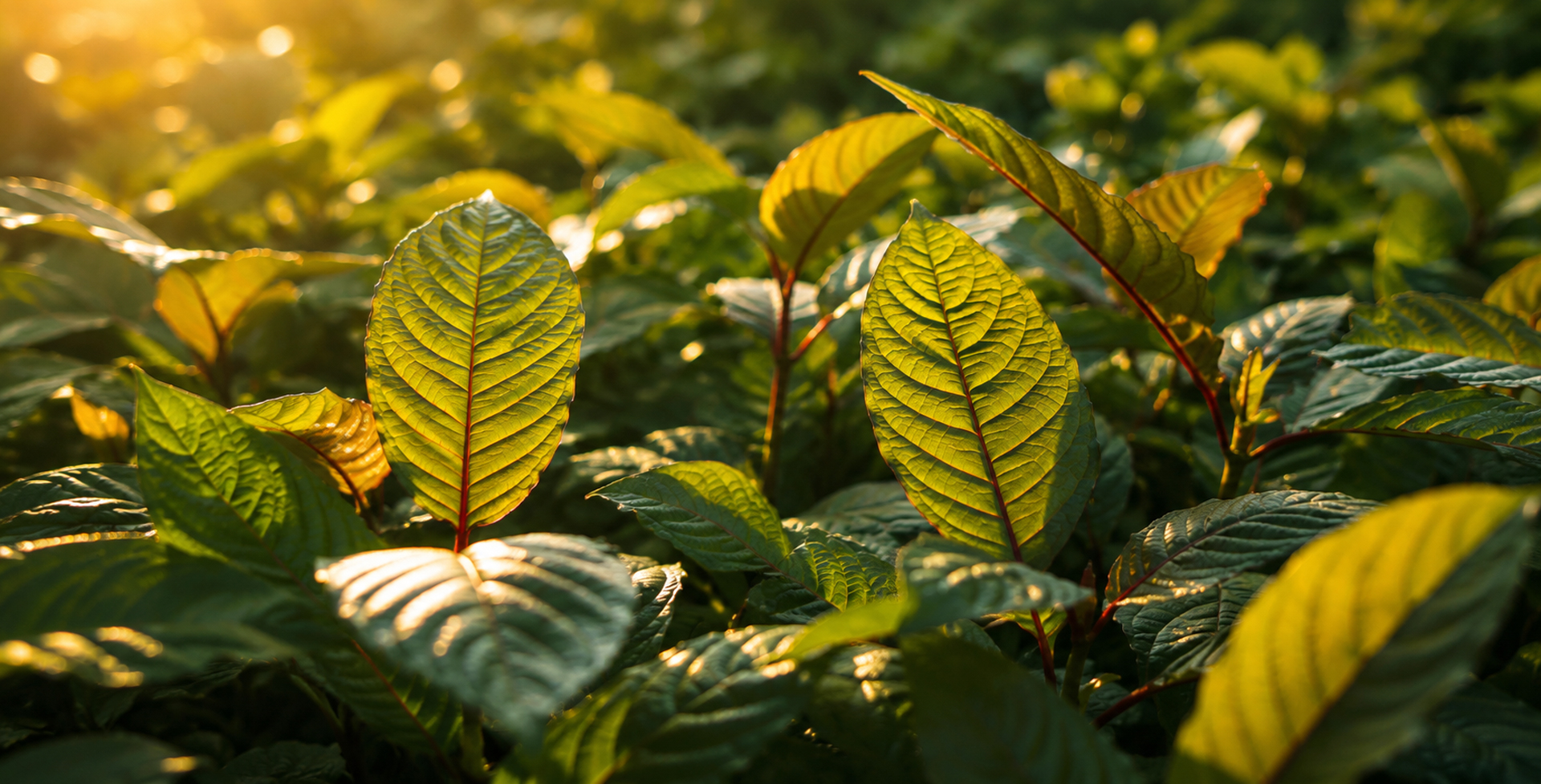
Mitragyna speciosa is part of the Rubiaceae family, a large plant family that includes many tropical trees, shrubs, and economically important species.
Botanical name Mitragyna speciosa
Common name Kratom
Plant family Rubiaceae
Growth form Tropical evergreen tree
Native range Southeast Asia
Research interest Cultivation, propagation, plant adaptation, traceability, and natural-leaf production potential
In its native environment, kratom can develop into a large tree. In cultivation, especially outside tropical regions, its growth is likely to depend heavily on environmental control, plant age, pruning, container size, humidity, and seasonal protection.
For South African research, these factors matter. Kratom is not simply a plant that can be placed in the ground anywhere and expected to perform like a conventional local crop. It needs to be studied in context.
A brief botanical history
From Stephegyne speciosa to Mitragyna speciosa (Korth.) Havil.
Dutch botanist Pieter Willem Korthals first scientifically documented and classified Mitragyna speciosa in 1839. As the official botanist for the Dutch East India Service, he described the tree's distinctive miter-shaped stigma, which inspired the genus name Mitragyna.
Korthals' classification
- Initial naming: Korthals originally described the plant as Stephegyne speciosa in 1839.
- Final name: It was reclassified multiple times before British naturalist George Darby Haviland gave it its definitive scientific name, Mitragyna speciosa (Korth.) Havil., in 1897.
- Family: Korthals placed it within the Rubiaceae (coffee) family, native to tropical swamps and riverbanks across Southeast Asia — including Thailand, Indonesia, and Malaysia.
Pieter Willem Korthals (1839)
As the official botanist for the Dutch East India Service from 1831 to 1836, Korthals spent several years cataloguing plant life throughout the Malay Archipelago. During expeditions through the tropical river basins of Sumatra and Dutch-governed Borneo, he documented an evergreen tree already known locally for its traditional uses.
In 1839 he published his formal findings, originally placing the tree in the genus Stephegyne as Stephegyne speciosa. He coined the related genus name Mitragyna after observing that the pistil's stigma resembled a bishop's miter; the specific epithet speciosa translates from Latin as "beautiful" or "showy".
George Darby Haviland (1897)
British surgeon and naturalist George Darby Haviland served as the first curator of the Sarawak Museum in Borneo from 1893 to 1895. He returned to the plant more than half a century after Korthals to resolve longstanding confusion within the broader Rubiaceae family, where the genera Stephegyne, Nauclea, Uncaria, and Mitragyna routinely overlapped.
In 1897 he published his career-defining monograph, A Revision of the Tribe Naucleeae, in the Journal of the Linnean Society of London. Haviland dismantled the genus Stephegyne and transferred Korthals' specimen into Mitragyna, establishing the definitive name Mitragyna speciosa (Korth.) Havil.
Legacy
Korthals' expedition work introduced the plant to Western science, though indigenous Southeast Asian communities had used its leaves for centuries. Building on his foundational taxonomy, modern pharmacology has since identified more than forty alkaloids within the plant — research that continues to this day.
III · Habitat
Native habitat and growing conditions
Mitragyna speciosa is associated with warm, humid tropical environments. In its native range, it is often linked to regions with high rainfall, consistent warmth, and moisture-rich growing conditions.
This native background gives researchers important clues, but it does not answer the South African question.
South Africa has many different growing regions, from humid coastal areas to dry inland climates, winter rainfall zones, frost-prone areas, and controlled agricultural environments. A plant that grows naturally in Southeast Asia may require careful support to grow successfully here.
This is why Kratom Collective is interested in controlled and semi-controlled cultivation methods, including:
- greenhouse growing,
- net-house systems,
- humidity management,
- misting systems,
- container cultivation,
- winter protection,
- controlled propagation spaces,
- and careful observation of plant stress and recovery.
The question is not only whether kratom can survive in South Africa. The better question is:
Under what conditions can Mitragyna speciosa grow well, remain healthy, and be cultivated responsibly in South Africa?
IV · Form
Growth habit and plant form
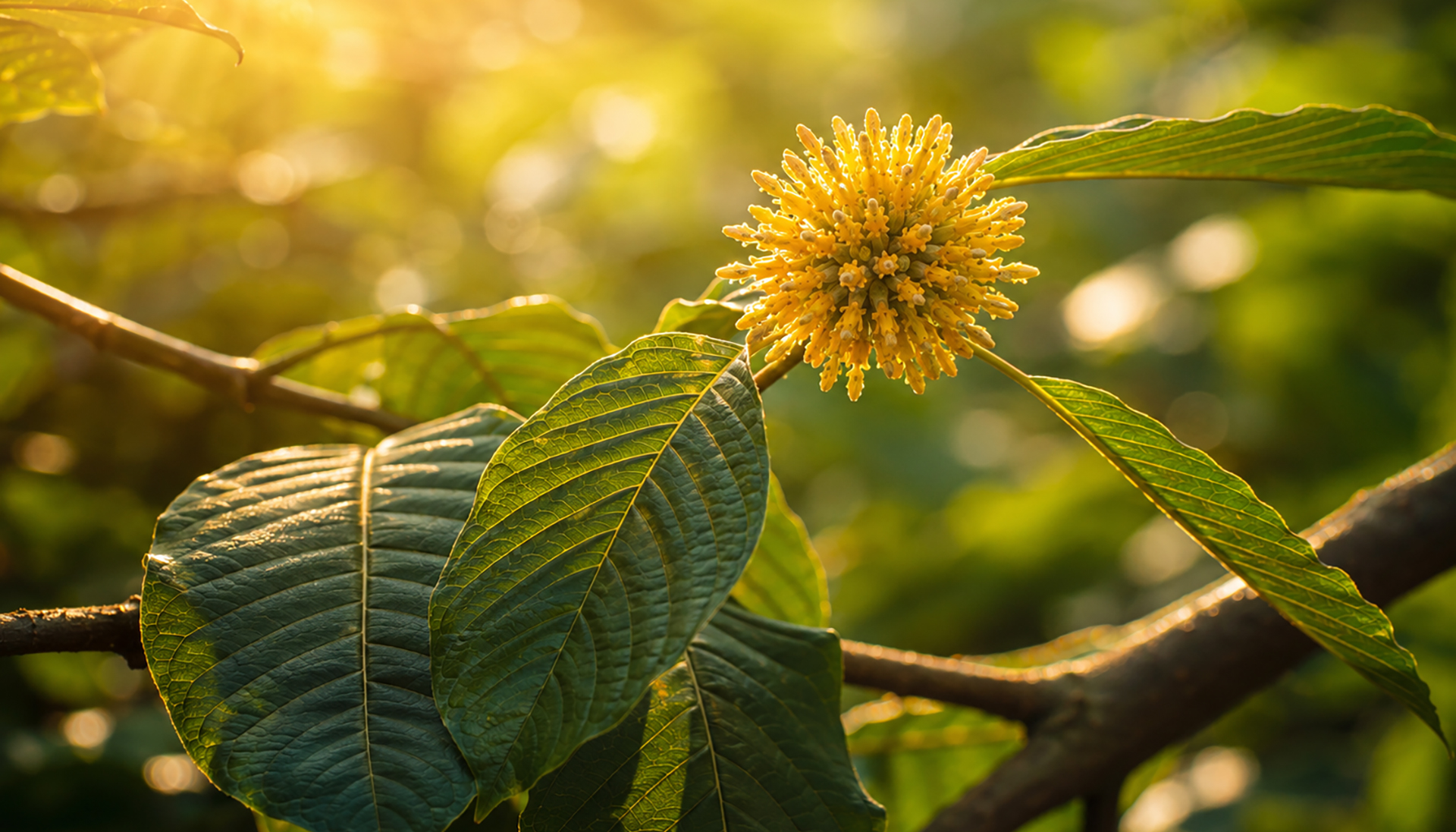
As a plant, Mitragyna speciosa is known for its broad green leaves, prominent venation, and tree-like growth habit.
The leaf is one of the most recognisable features of the plant. It is also one of the reasons kratom is often discussed in relation to natural-leaf material rather than only processed products.
A serious cultivation approach needs to observe the whole plant:
- leaf development,
- stem structure,
- branching behaviour,
- root development,
- new growth cycles,
- pruning response,
- stress signs,
- pest sensitivity,
- seasonal growth patterns,
- and long-term plant health.
For Kratom Collective, these details matter because they help build a practical picture of how the plant behaves over time.
A plant is not understood by reading about it once. It is understood by growing it, observing it, recording it, and learning from repeated cycles.
V · Propagation
Why propagation matters
Propagation is one of the most important areas of kratom research.
If a plant cannot be propagated reliably, it cannot easily become a nursery plant, research subject, or future crop. Reliable propagation is also important for maintaining clean plant material, documenting origin, and reducing dependence on uncertain imported sources.
Kratom Collective is interested in propagation questions such as:
- Can kratom be propagated from cuttings?
- What conditions support root development?
- How do humidity, temperature, and substrate affect success?
- How do young plants respond after rooting?
- What are the common failure points?
- Can propagation be standardised?
- How can nursery-stage plants be hardened off?
- What conditions improve survival after transplanting?
Before any larger conversation about farming, nursery supply, or responsible productisation can happen, the plant must first be propagated, grown, and documented successfully.
VI · The Leaf
Kratom as a leaf plant
Kratom is often associated with its leaves. That does not mean Kratom Collective is making claims about use, treatment, dosage, or health outcomes.
Our interest in the leaf is botanical and agricultural.
Leaves tell a grower a great deal about the plant:
- whether it is actively growing,
- whether it is stressed,
- whether it has enough humidity,
- whether it is receiving too much or too little light,
- whether nutrition may be imbalanced,
- whether pests or disease are present,
- whether the plant is adapting to its environment.
If kratom is ever to be responsibly discussed as a natural-leaf botanical raw material, then leaf quality, leaf development, and leaf traceability must be studied carefully. That includes questions around:
- healthy leaf growth,
- harvest timing,
- post-harvest handling,
- drying conditions,
- storage,
- contamination risks,
- and local origin documentation.
These are not marketing claims. They are supply-chain and cultivation questions.
VII · Distinctions
Natural leaf, extracts, and synthetic derivatives are not the same
One of the most important distinctions in the kratom conversation is the difference between the living plant, natural leaf material, extracts, concentrated products, and synthetic derivatives.
These should not all be treated as if they are the same thing.
Kratom Collective’s work is focused on:
- the living plant,
- cultivation,
- propagation,
- natural leaf development,
- clean growing practices,
- and traceable plant material.
We are not focused on synthetic kratom compounds, concentrated derivatives, or high-strength extract culture.
It is possible to research Mitragyna speciosa responsibly without endorsing every product sold under the kratom name.
VIII · Order of Knowledge
Why study the plant before the product?
In many markets, the product conversation comes first.
People encounter kratom as a powder, capsule, extract, online product, or legal controversy before they ever see the tree. That creates a distorted public understanding.
Kratom Collective believes the order should be reversed.
- Before productisation, there should be plant knowledge.
- Before commercial farming, there should be cultivation research.
- Before regulation, there should be credible information.
- Before public fear or public hype, there should be careful observation.
This approach matters because a future responsible botanical supply chain depends on plant-level understanding: where the plant came from, how it was propagated, how it was grown, what inputs were used, how it was harvested, how it was handled, and whether the process can be documented.
Without this knowledge, the market remains dependent on anonymous imported powders and uncertain supply chains.
IX · South Africa
Can Mitragyna speciosa grow in South Africa?
This is one of the central questions behind Kratom Collective.
The honest answer is: it needs research.
South Africa is not one climate. It contains many growing environments, each with different opportunities and limitations. Some regions may offer better humidity, warmth, or winter conditions than others. In colder or drier areas, greenhouse or net-house systems may be required.
Possible growing approaches may include:
- greenhouse cultivation,
- shade or net-house cultivation,
- humidity-controlled propagation,
- protected pot culture,
- indoor nursery stages,
- misting systems,
- and region-specific trials.
The goal is not simply to keep a plant alive. The goal is to understand whether Mitragyna speciosa can grow well enough, consistently enough, and cleanly enough to justify future cultivation interest.
That requires time. It also requires careful documentation of success, failure, seasonal response, and cost.
X · Traceability
Controlled cultivation and traceability
If kratom is ever to become part of a responsible South African botanical discussion, traceability will matter.
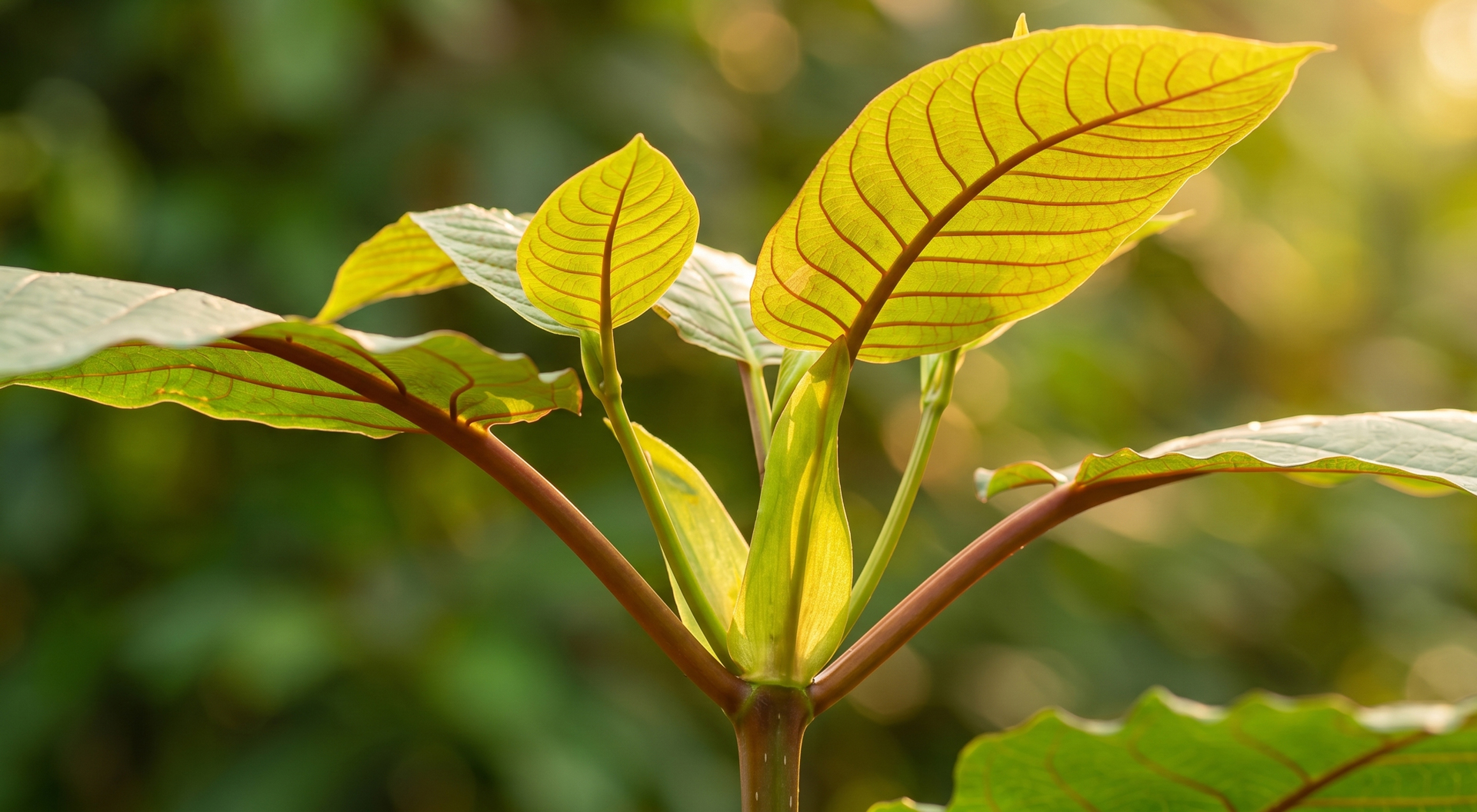
Traceability begins with the plant.
A responsible cultivation system should be able to ask and answer:
- Where did the plant material originate?
- How was it propagated?
- Where was it grown?
- What growing conditions were used?
- What inputs were applied?
- How was plant health monitored?
- Was the growing environment clean and documented?
- How was material harvested and handled?
These questions are important for any serious crop, but especially for plants surrounded by public concern and regulatory uncertainty.
The future of any clean botanical raw material begins long before harvest. It begins with how the plant is grown.
XI · Serious Study
Why the plant deserves serious study
Some plants become controversial before they are properly understood.
When that happens, the public often inherits a poor-quality conversation. One side makes exaggerated claims, another side reacts with fear, and the plant itself disappears beneath the debate.
Mitragyna speciosa deserves better than that.
It deserves serious study because:
- it already has global relevance,
- it is already part of product markets,
- it is already being regulated and debated,
- it is already being imported and consumed in some parts of the world,
- and there is not enough open, practical cultivation knowledge outside its native range.
Studying kratom does not mean ignoring risk. It means taking the subject seriously enough to understand it. Good research can help separate:
- plant facts from product hype,
- natural leaf from synthetic derivatives,
- cultivation questions from medical claims,
- regulatory concerns from stigma,
- and genuine potential from exaggerated promises.
XII · Our Work
What Kratom Collective is studying
Kratom Collective’s plant-focused research includes practical areas such as:
Cultivation
How Mitragyna speciosa grows under different conditions, including light, humidity, temperature, substrate, container size, and seasonal change.
Propagation
How new plants can be established, rooted, hardened, and maintained in nursery-style conditions.
Adaptation
How the plant responds to South African environments, including stress, recovery, winter protection, and microclimate differences.
Documentation
How plant growth, morphology, health, and environmental response can be recorded in a useful and transparent way.
Traceability
How local origin, propagation history, growing conditions, and future harvest questions can be documented responsibly.
Future Crop Potential
Whether the plant may one day support responsible nursery development, controlled cultivation, or clean natural-leaf raw material under an appropriate legal and regulatory framework.
XIII · Boundaries
What we are not studying
Kratom Collective is not a medical platform.
We do not provide medical advice, dosage guidance, treatment recommendations, or claims that kratom treats, cures, prevents, or manages any medical condition.
We are also not focused on synthetic or concentrated kratom derivatives.
Our research is not about promoting hype, shortcut commercialisation, or unregulated product sales.
Our present focus is the plant itself:
- how it grows,
- how it propagates,
- how it adapts,
- how it can be documented,
- and whether South Africa can build credible local knowledge around it.
XIV · Perspective
A living plant, not just a debate
For many people, kratom exists only as an argument.
For some, it is a product. For others, it is a risk. For others, it is a political or regulatory issue.
For Kratom Collective, it begins as a living plant.
That distinction shapes everything.
A living plant requires patience. It cannot be understood in a rush. It responds to its environment, records stress in its leaves, changes with the seasons, and teaches through observation.
This is why Kratom Collective’s work begins quietly: with cultivation, propagation, documentation, and careful questions.
From that foundation, better conversations can grow.
Closing
Understanding the plant first
Mitragyna speciosa sits at the intersection of botany, traditional plant knowledge, modern market demand, regulation, agriculture, and public misunderstanding.
That makes it worth studying carefully.
Kratom Collective exists to build local South African knowledge around the plant itself: how it grows, how it can be propagated, how it responds to controlled environments, and whether it may one day support responsible cultivation as a clean, traceable botanical raw material.
We are not here to make exaggerated claims.
We are here to study the plant.
Kratom Collective
Cultivating Potential
Invitation
Follow the research
Kratom Collective is still in the foundational stage of plant research and cultivation observation.
If you are a researcher, grower, agricultural professional, regulator, botanical organisation, or serious contributor interested in Mitragyna speciosa research in South Africa, we welcome meaningful conversation.
Correspondence
Contact the initiative
Enquiries are welcome from researchers, growers, regulatory bodies, agricultural contributors, botanical organisations, and interested members of the public.